Wednesday, June 16, 2010

Eastern European Mass Media


Articles on the passage from the state/party controlled monopolies of Eastern European nations to the commodified systems post-1989. Everyone should read these articles as background for preparing their presentations.

Kevin Williams - "The Media in Eastern Europe"

European Mass Media: Deregulation, Commodification and Neo-Television


Here are two articles to think through some of the more specific issues on the paradigm shift in European Broadcasting during the 1980s and 1990s and the shift toward deregulation and privatization. The articles by Umberto Eco and Raymond Williams are two theoretical and critical reflections on the aesthetic repercussions of liberalization on both programs and audiences. Relate these readings to Nichetti's The Icicle Thief (Ladri di Saponette).

Saturday, June 12, 2010

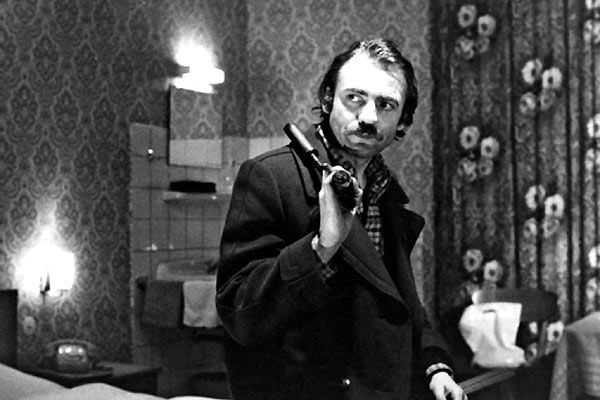
National Cinemas, Art Films, American Friends and Cultural Imperialism or, What's Wrong With A Cowboy in Hamburg?

What's wrong with a cowboy in Hamburg?
"The Americans have colonized our subconscious" (Wenders in "Kings of the Road")

Readings for this week's discussion on the concept of National Cinema, the Art Film and Wim Wenders' Der Amerikanische Freund (1977)

Bordwell, "The Art Cinema as a Mode of Film Practice" from Poetics of Cinema
Elsaesser, "American Friends: Hollywood Echoes in the New German Cinema"
Jarvie, "Free Trade as Cultural Threat: American Film and TV Exports in the Post-War Period"

Here is a mainstream review of the film from everyone's favorite middle-brow film critic, Roger Ebert.

Sunday, June 6, 2010

'Free' or 'Pirate' Media?


Below is Hans Magnus Enzensberger's "Constituents of a Theory of the Media" where he discusses the concepts of 'emancipatory vs. repressive uses' of the media while offering a radical critique of traditional progressive conception of public/state media in favor of the 'new media' potentials of 'free' media. Hesmondalgh's article is a general reflection on the concept of alternative media, it's organization and the specific textual production.

Roger Chapman's article is a comparative analysis of the two main British 'pirate' radio stations, Radio London and Radio Caroline and how they differentiated themselves on the basis of their attitude to commercialism and their mission.

Finally John Downing writes on 'radical media' in Italy covering a number of activist situations and their use of new communication technologies by political movements during the late '60s and early '70s. This last article will be the clearest contextualization of Marco Tullio Giordana's I Cento Passi.

Something to think about in relation to I Cento Passi is how Peppino Impastato's attempts at carving out a space for communication and direct political action (a public sphere within the confines of a small community dominated by organized crime and their ties to the political realm) is dramatized in the film --from traditional political rallies to 'free radio' after navigating dadaist street theater, pamphleteering, film screenings and be-ins. Think specifically of the characteristics of RadioAut --programming, control, voice, 'mission', etc.

Hesmondalgh, "Alternative Media, Alternative Texts?"
Enzensberger, "Constituents of a Theory of the Media"
Chapman, "The 1960s Pirates: A Comparative Analysis of Radio Caroline and Radio London"

Downing, "Radical Media in Italy" from Radical Media


Thursday, June 3, 2010

The Making of a Media Empire

"The Making of a Television Empire"
from Paul Ginsborg's Silvio Berlusconi: Television, Power, Patrimony


Also, from today's New York Times an article on the economic woes of leading French daily newspaper Le Monde. Please read the article for a good example of a major newspaper operating in a commercial context but organized according to very specific principles to safeguard values and principles that are not necessarily economic.

Le Monde Seeks a Financial Savior from the NYT June 2, 2010

+n.b. Apologies for the cancellation today. We will screen I Cento Passi on Monday so those who already have seen the film should definitely be in class tomorrow.