Saturday, December 10, 2011

Ethics Final Exam Study Guide


Here is the study guide for your final exam as well as Susan Sontag's "Looking At War". This is the original version of the article as it appeared in The New Yorker. If you like what you read a good suggestion for your holidays is to get the expanded version as it appears in Regarding the Pain Others, the book that Sontag completed right before her death.
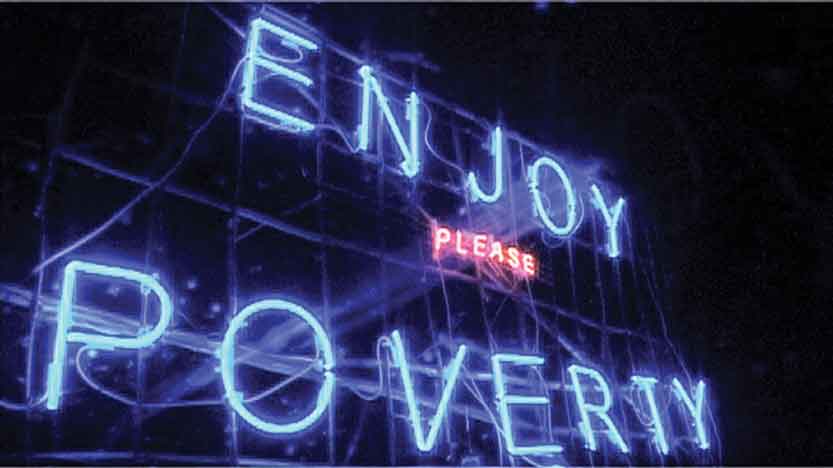
I am also including two articles on Enjoy Poverty itself (one of them is an interview with Renzo Martens).


"Enjoy Poverty" in Art Monthly
"Enjoy Poverty" in Art Papers
Bonus Interview from the "Africa is a Country Blog" here.

Wednesday, November 23, 2011

Active or Interactive? Copyrights and Copyfights II

Evil Bert & Che

Evil Bert is referenced in the Jenkins article below. Find the original Bert Is Evil website here at WayBackMachine. The story of the Bert Is Evil website is told here at Wikipedia. A contemporary site for all kinds of Evil Bert stuff is here.

Matt Mason - We Invented The Remix

Henry Jenkins - Photoshop for Democracy

You can find James Boyle's The Public Domain: Enclosing the Commons of the Mind --which is licensed under a Creative Commons Attribution-Noncommercial-Share Alike License-- available for download from Yale University Press here.

"Musical styles change over time and so do their techniques of appropriation. Sometimes musical generations find their successors are engaging in different types of borrowing than they themselves engaged in. They do not always find it congenial. It is striking how often musicians condemn a younger generation’s practice of musical appropriation as theft, while viewing their own musical development and indebtedness as benign and organic. … [Sampling] is a different kind of borrowing than the adaptation of a chord pattern from a gospel standard to make an R&B hit. But which way does the difference cut as a matter of ethics, aesthetics, or law?"

This is good material for those of you interested in copyright and appropriation especially if you are thinking of working on these issues for your final papers. Chapter 6 ("I Got A Mashup") is especially pertinent. Chapter 6 is here, from the 'annotatable' version on the website of Boyle's book.

Himanen, "From Netiquette to a Nethic"
(includes Linus Torvalds' Preface to The Hacker Ethic, "What Makes Hackers Tick?")
Wark, "The Hacker Manifesto"

Also, Dancehall/Reggae History Bonus (Recommended Reading):
Dick Hebdige - from Cut'N'Mix: Culture, Identity and Caribbean Music


Finally, for those of you who still don't have it you can download Girl Talk's breakthrough Feed The Animals from the Illegal Art website as a free download. Enjoy the 'official' 372 overlapping samples. You can find detailed info on all of them here.
Bob Christgau, the "Dean of American Rock Critics", provides an inter-generational appreciation of Girl Talk on NPR here.

Queering Texts: Popular Culture and The Oppositional Gaze

Susan Sontag, "On Camp"

Richard Dyer, "In Defense of Disco"
Richard Dyer, "Judy Garland and Gay Men"

bell hooks, "The Oppositional Gaze"


"I Know You Are, But What Am I?"

Saturday, November 12, 2011

The Problem of Speaking for Others


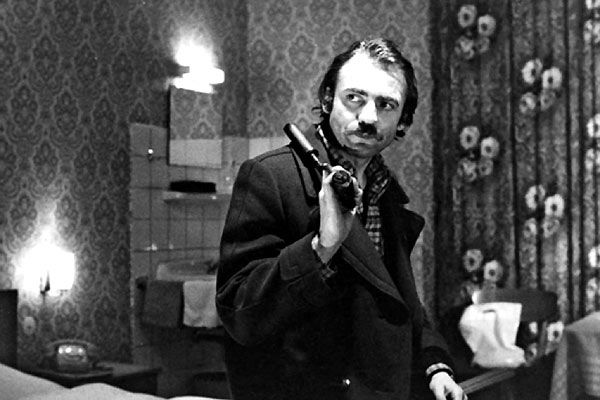
Please watch the interview with Jean-Luc Godard below. It is a good introduction to his way of thinking in the early sixties and in the procedures of the work he did with Jean-Pierre Gorin and the Dziga Vertov Group. He speaks ofTout Va Bien, a 'fiction' film he made with Jane Fonda and Yves Montand, as a more politically effective reflection on political struggle compared to a straight documentary film like Coup Pour Coup by Marin Karmitz or Barbara Kopple's Harlan County, USA which we will be watching a clip in class. Tout Va Bien is the film at the origin of the short Letter To Jane which we will also be screening and discussing in class.

Active or Interactive? Copyrights and Copyfights I


Aoki, Boyle and Jenkins, Bound By Law?
This is the comic book on copyright. Don't be fooled by its form: this is required reading.
You can also find it free on-line from its publisher --crazy, huh?-- Duke University and The Center for the Study of the Public Domain in a variety of formats. You can also 'remix' it and you're encouraged to translate it. It's all here.

From Technology Review (free registration might be required) read the debate around the question:

Who Should Own Ideas?

Lessig, "The People Own Ideas!"

Epstein, "The Creators Own Ideas!"
And the winner is...

While you're at it, look at your 'friends' on Facebook and ask yourselves: Who Owns Your Friends...

Larry Lessig, The 'Commons and Layers' Chapters from The Future of Ideas

Here's the complete version of the Lessig talk we will be watching excerpts from in class.
You can download it here.

This was Lessig's 'last' talk on Free Culture and it has that sort of summing up about it.
You can find his original presentation in a number of different formats (powerpoint, mp3, flash presentation, transcript, pdf, etc.) here.

Lawrence Lessig and The Future of Ideas by Bryan Alexander from Mindjack is an interesting summary article with lots of links.
Finally, here is the site for Creative Commons. Look them up.

GLBT Representation in Film and Television

Kylo-Patrick R. Hart, "Representing Gay Men on American Television"
Diane Raymond, "Popular Culture and Queer Representation: A Critical Perspective"

Susan J. Hubert, "What's Wrong With This Picture: The Politics of Ellen's Coming Out Party"
Fred Fejes, "Advertising and the Political Economy of Lesbian/Gay Identity"

Sunday, October 30, 2011

The Social Construction of Race, Part Deux


This is the bulk of readings for the 'discourses of race' section of the course as we wade through it this week and next. Please have these articles read in the order posted. Pay particular attention to Zook's article on the Fox Network as it invests that political economic perspective that is so well dramatized in Bamboozled as well as the Means-Coleman article on 'black sitcoms' which is a good example of textual analysis.

Kristal Brent Zook, "The Fox Network and the Revolution in Black Television"
Robin R. Means-Coleman, "Black Sitcom Portrayals"
Donald Bogle, "Workplace Dramas, Ensemble Casts 1990s Style"
Chyng Fen Sun, "Ling Woo in Historical Context: The New Face of Asian American Stereotypes on Television"

Participatory Culture and Collective Intelligence


from Convergence Culture


from The Future of Ideas

from The Hacker Ethic

Sunday, October 23, 2011

The Social Construction of Race I


This a short introductory article on race and the media. As we watch Spike Lee's Bamboozled and discuss the film, Ash Corea's "Racism and the American Way of Media" is a good summary of the issues raised in the film and those that you will be reading about in greater detail with the next group of articles. As a bonus, a classic article by Stuart Hall.

Ash Corea, "Racism and the American Way of Media" from Questioning the Media
Stuart Hall, "What is This 'Black' in Black Popular Culture" from Stuart Hall: Critical Dialogues in Cultural Studies


Clip from a 1949 film, Hollywood Varieties, where actors Glenn Vernon and Edward Ryan apply blackface make-up while on stage and reminisce about 'the good ol' days' --as they say-- of ministrelsy.

Tuesday, October 18, 2011

Tuesday, October 11, 2011

Manovich, What Is New Media


This is the complete chapter from Lev Manovich's The Language of New Media. Reflect on the qualities that he identifies as pertaining to 'new media' as we integrate our encounters with the technologies and changed social contexts of digital converged media.

Manovich, What Is New Media?

Emancipatory Uses of The Media


Here are the new readings: Please find below Hans Magnus Enzensberger's "Constituents of a Theory of the Media" together with an article over viewing 'radical media' in Italy and the use of new communication technologies by political movements during the late '60s and '70s. This last article should accompany your viewing of Marco Tullio Giordana's I Cento Passi and provide you with context (both for the film itself and the historical period in which Enzensberger wrote the 'Constituents' article). The Hesmondalgh is an article attempting to define and focus the features of 'alternative' and 'radical' media.

Something to think about in relation to the film is how Peppino Impastato's attempts at carving out a space for communication and direct political action (a public sphere within the confines of a small community dominated by organized crime) is dramatized in the film --from traditional political rallies to 'free radio', after navigating dadaist street theater, pamphleteering, film screenings and be-ins. Think specifically of the characteristics of RadioAut --programming, control, voice, 'mission', etc. Does the 'network' finally deliver on those expectations?

Enzensberger - Constituents of a Theory of the Media
Downing - Radical Media in Italy


Extra Readings on Old vs. New Media Conceptions:
Michael Crichton - Mediasaurus (1993)
Jack Schaefer - Reflections on Mediasaurus

Ethics, Society and Moral Reasoning: Content and Ratings

Day, Ethics and Society (Chp. 2 of Ethics in Media Communication; Wadworth, 2006)
Day, Ethics and Moral Reasoning (Chp. 3 of Ethics in Media Communication; Wadworth, 2006)
Johnson, Ethical Perspectives (Chp. 1 of Organizational Ethics: A Practical Approach; Sage, 2011)

Please watch the following, famous episode of Ellen's coming out aired on ABC in 1997. Consider questions of content and 'ratings'. Be ready to discuss the ethical implications of airing the episode on mainstream broadcast television. Be prepared to discuss your reasoning and perspective.


Visual Pleasure and Narrative Cinema: Psychoanalytic Feminist Film Theory

"Woman as image, man as bearer of the look"
Otto Preminger's Laura (1944)

Laura Mulvey, "Visual Pleasure and Narrative Cinema"

You can also find it in html format here.

This is the article that failed to post relating to the readings assigned for Week 4:
Jean Kilbourne, “The More You Subtract, the More You Add: Cutting Girls Down to Size”

Thursday, September 29, 2011

Corporate Media, Regulation and Taking Back The Media


In the readings below you can find a good summary of the ideas that we have been debating in class around the organization of media systems, their ability to serve the public good and the resistances to regulation. Many of you have encountered these ideas in your other media studies classes but this is as good a moment as any to go over them in the systematic manner in which these readings do. LINKS ARE NOW FIXED

McChesney, Corporate Media and the Threat to Democracy
Sanders, "Why Americans Should Take Back The Media"
Spence et al, "The Business of the Media and the Business of the Market"
Anthology of articles from The Future of the Media

Bonus: After yesterday's screening follow this link and take the BBC's Silvio Berlusconi Birthday Quiz. After all it was his birthday yesterday. Then you can watch Lloyd Kaufman on media consolidation below.

Wednesday, September 28, 2011

New Media: Gaming

Pac-Man Skull

These are two articles on videogames and their history. Use them in conjunction with the screening of Game On: The Unauthorized History of Video Games screened in class.

Bolter & Grusin, "Computer Games" (from Remediation)
P. David Marshall, "Playing Game Cultures: Electronic Games"

Super Mario 25th Anniversary

Thursday, September 22, 2011

Media Law and Codes of Ethics


Here is the link for Poynter's Online Media Law short course. The readings on media reform will be posted tomorrow evening. Below you can also find two Codes of Ethics, one for Journalists and one for Marketers. Please be ready to discuss these in class on Tuesday along with the other readings.


The Poynter course is at: http://tinyurl.com/39ejw9x
Journalism Code of Ethics: http://tinyurl.com/ylfb554
Marketers Code of Ethics: http://tinyurl.com/yktg9pq

Monday, September 19, 2011

Text and Context: Political Economy & Reception

Janice Radway, "Women Read The Romance: The Interaction of Text and Context"

EXTRA READING: Stuart Hall, "Encoding-Decoding"


Opening of last night's 2011 Emmy Awards: "To men, you're womanish, to women, you're mannish."

Textuality: Semiotics


To complement the other readings, here are three different discussions of 'semiotics' and semiotic analysis and their use for cultural studies and the analysis of media representations. These are not required readings if you have encountered 'media semiotics' before. I would however suggest, to those of you who are encountering 'semiotics' for the first time, to treat these readings as required readings: your work in class, your ability to grapple with the other required readings and your final project would certainly benefit from a familiarity with the concepts presented here.

Mieke Bal, Semiotics for Beginners
Scott McCloud, from Understading Comics: Chapter 2, Semiotics
Jonathan Bignell, Media Semiotics: Introduction + The Cinema

Monday, September 5, 2011

Cultural Studies and Representation: Race and Gender I

Power, Privilege and Discrimination
Peggy McIntosh, "White Privilege: Unpacking the Invisible Knapsack"

Cultural Studies & Representation
Douglas Kellner, "Cultural Studies, Multiculturalism and Media Culture"
Sanjukta Gosh, "'Con-Fusing' Exotica: Producing India in US Advertising"

Ideology and Hegemony
Stuart Hall, "The Whites of Their Eyes: Racing Ideologies and the Media"
James Lull, "Hegemony"

all readings are from Dines and Humez (eds), Gender, Race and Class in Media: A Text-Reader; 2nd Edition(Sage, 2003)

'New' Media: Impact of Digital Technology on Film and Television


These are the readings for the first weeks of class and discussion. Remember that we are still in the process of investigating the concept of 'new' media and trying to go beyond a mere chronology of new technologies in favor of a more nuanced and specific understanding of the truly 'new' aspects of digital converged media and the social potential/consequences from a politically progressive perspective --the 'what's new for society' question.

The articles here will introduce you to some of the more practical transformations that the appearance of digital technologies have produced in 'old' media like film and television. Please note that as we discussed in class, even in this case, the transformations are both smaller and larger than those one could imagine: on the one hand, the film and televisual experience is for the most part unchanged; on the other, however, the film medium and the specificity of the photo/cinematographic image has been dramatically transformed as it loses its indexicality and the medium goes from a synthetic to an analytic one while television's horizon ceases to be that of a regulated/national context to an open/transnational one.


David Croteau & William Hoynes, "The New Media Giants: Changing Industry Structure"

Sean Cubitt, "Digital Filming and Special Effects"
P. David Marshall, "Rejuvenation: Film in the Digital World"
Anne Friedberg, "CD and DVD"
Janet Wasko, "The Future of Film Distribution and Exhibition"

Michele Hilmes, "Cable, Satellite and Digital Technologies"
P. David Marshall, "Rejuvenation: Television"

Welcome To Fall 2011


Sunday, June 12, 2011

De-Stalinization = De-Regulation?: Eastern European Mass Media


Articles on the passage from the state/party controlled monopolies of Eastern European nations to the commodified systems post-1989. Everyone should read these articles as background for preparing their presentations.

Kevin Williams - "The Media in Eastern Europe"

European Mass Media: Deregulation, Commodification and Neo-Television


Here are a number of articles to think through some of the more specific issues on the paradigm shift in European Broadcasting during the 1980s and 1990s and the consequent shift toward deregulation and privatization. The Ginsborg and Hibberd articles are specifically on the 'Italian case'. The articles by Umberto Eco and Raymond Williams are two theoretical and critical reflections on the aesthetic repercussions of liberalization on both programs and audiences. Relate these readings to our screening of Maurizio Nichetti's The Icicle Thief (Ladri di Saponette).


Paul Ginsborg, "The Making of a Television Empire"
from Ginsborg's Silvio Berlusconi: Television, Power, Patrimony (Verso, 2005)
from Bull & Rhodes, Italy: A Contested Polity (Routledge, 2009)

Umberto Eco, "A Guide to the Neo-Television of the 1980s"
from Williams, Television: Technology and Cultural Form (Routledge, 1990)

This just in:
From this week's The Economist, an article on Italy with an eloquent title if there ever was one: "The Man Who Screwed an Entire Country". Find the editorial here.

Please note that The Economist is the most respected European business weekly whose stance on economic policy can only be characterized as fanatically pro-business and pro-capitalism --in short the magazine is regarded as predominantly very conservative.
I point this out primarily to underline how basic thinking on the role, function and values of the mass media --particularly of the press-- manages to cross ideological lines. This puts the so-called Italian anomaly into perspective as an issue which is ultimately a populist and bipartisan one and not tied to specific ideological perspectives.


Saturday, June 4, 2011

National Cinemas, Art Films, American Friends and Cultural Imperialism or, What's Wrong With A Cowboy in Hamburg?

What's wrong with a cowboy in Hamburg?
"The Americans have colonized our subconscious" (Wenders in "Kings of the Road")

Readings for this week's discussion on the concept of National Cinema, the Art Film and Wim Wenders' Der Amerikanische Freund (1977)

Bordwell, "The Art Cinema as a Mode of Film Practice" from Poetics of Cinema
Elsaesser, "American Friends: Hollywood Echoes in the New German Cinema"
Jarvie, "Free Trade as Cultural Threat: American Film and TV Exports in the Post-War Period"

Here is a mainstream review of the film from everyone's favorite middle-brow film critic, Roger Ebert.

Monday, May 30, 2011

'Free' or 'Pirate' Media?


Below is Hans Magnus Enzensberger's "Constituents of a Theory of the Media" where he discusses the concepts of 'emancipatory vs. repressive uses' of the media while offering a radical critique of traditional progressive conception of public/state media in favor of the 'new media' potentials of 'free' media. Hesmondalgh's article is a general reflection on the concept of alternative media, it's organization and the specific textual production.

Roger Chapman's article is a comparative analysis of the two main British 'pirate' radio stations, Radio London and Radio Caroline and how they differentiated themselves on the basis of their attitude to commercialism and their mission.

Finally John Downing writes on 'radical media' in Italy covering a number of activist situations and their use of new communication technologies by political movements during the late '60s and early '70s. This last article will be the clearest contextualization of Marco Tullio Giordana'sI Cento Passi.

Something to think about in relation to I Cento Passi is how Peppino Impastato's attempts at carving out a space for communication and direct political action (a public sphere within the confines of a small community dominated by organized crime and their ties to the political realm) is dramatized in the film --from traditional political rallies to 'free radio' after navigating dadaist street theater, pamphleteering, film screenings and be-ins. Think specifically of the characteristics of RadioAut --programming, control, voice, 'mission', etc.

Hesmondalgh, "Alternative Media, Alternative Texts?"
Enzensberger, "Constituents of a Theory of the Media"
Chapman, "The 1960s Pirates: A Comparative Analysis of Radio Caroline and Radio London"

Downing, "Radical Media in Italy" from Radical Media


Wednesday, May 25, 2011

Public Service Broadcasting: Ises and Oughts


Here are the final readings for this week. Concentrate your reflections on the concept of PSB (public service broadcasting), it's features, criteria and justifications.

from Humphreys, Mass Media and Media Policy in Western Europe
Chapter 3: Press Concentration in Western Europe
Chapter 4: European Public-Service Broadcasting System

Richard Collins, "'Ises' and 'Oughts': Public Service Broadcasting in Europe"
from Allen & Hill (eds), The Television Studies Reader (Routledge, 2004)


Monday, May 23, 2011

European Societies and Media Culture

from Humphreys, Mass Media and Media Policy in Western Europe
Intro + Chapter 1: Press Freedom: The Free Market and the Development of the Modern Press
Chapter 2: Press Freedom and its Limits: The State, the Law and the Private Individual

from Williams, European Media Studies
Chapter 1: The European Media Landscape
Chapter 2: The Press in Europe

Sunday, May 22, 2011

Welcome To Summer I 2011


Welcome to Summer I: for this session the blog is exclusively dedicated to the CMS 315 European Mass Media class. Please check back often to find readings, bits of information taken from the internet together with breaking news and current issues that we can use for class discussion.

Thursday, April 21, 2011

Sunday, April 17, 2011

(Final) Popular Music Readings


Assuming that at this point you are (basically) all done with the Garofalo textbook, here are the reading assignments up to the end of the semester:

On 'co-optation':
Thomas Frank's "Commodify Your Dissent" here.

On Jamaican Music:
from Dick Hebdige, Cut'n'Mix here.

On Gender:
Simon Frith and Angela McRobbie, "Rock and Sexuality"
Simon Frith, "Afterthoughts
"Richard Dyer, "In Defense of Disco"
Find these articles here as a single PDF file.


On 'sub-cultures':
Here are the Dick Hebdige chapters from Subculture: The Meaning of Style. Refer back to the Punk: Attitude film screening.


The Ramones, "Do You Remember Rock'n'Roll Radio?" Live in Rome, 1980


On sampling, mash-ups and the 'postmodern turn':
Andrew Goodwin, "Sample and Hold"
E Ann Kaplan, "A Postmodern Play of the Signifier?" (Fixed Link Now)
Negativland, "from Wired: Negativland Interviews U2's The Edge"

Also, to clarify (or further obscure) 'postmodernism' please help yourself --in case you have not encountered it in your other studies-- to Fredric Jameson's "Postmodernism and Consumer Society"

There will be two further articles specifically on hip-hop culture and post-Napster music industry.

The Democratic Right To Know

James Boyle from The Public Domain: Enclosing the Commons of the Mind
Link above is for the whole book which Boyle made available through the Creative Commons License. You should read Chapter 6: I Got A Mashup.
If you don't want to download the whole book you can find a link to the annotatable online version of the chapter here.

Matt Mason - We Invented The Remix

Aoki, Boyle and Jenkins - Bound By Law?
This is a comic book on copyright. Don't be fooled by it's form: it's a great read and I strongly encourage you to read at least the first 15 pages.
You can also find it free on-line from its publisher --crazy, huh?-- Duke University and The Center for the Study of the Public Domain in a variety of formats. You can also 'remix' it and you're encouraged to translate it. It's all here.

From The Cultural Resistance Reader: please have the articles in Section Seven read. The following articles from Section 8 are also required: Jordan on 'Reclaim the Streets'; Jason Grote on 'Revered Billy' and Ricardo Dominguez's 'Electronic Disturbance'

Bonus:

This is an old post from the blog where you can find a link to download Girl Talk's Feed The Animals.

Did I mention that the following Jenkins article is something that you should read?

Saturday, April 9, 2011

Convergence Culture & Resistance

Map of the Internet, circa 2003 (Source The Opte Project)

Required readings:


(includes Linus Torvalds' Preface to The Hacker Ethic, "What Makes Hackers Tick?")
Wark, "The Hacker Manifesto"

The following are recommended readings that some of you might have already encountered in other classes. If you have not, I highly encourage you to read these as they provide a wealth of contextual information and integrate many of the concepts that we are at present discussing in class particularly in relation to the 'new' mediated environments that surround us.

Monday, March 28, 2011

The Audience Strikes Back


For Those About To Rock: Return of the Aura

Frank Zappa & Captain Beefheart

Here are a couple of articles to integrate Keightley's Reconsidering Rock article. The first Frith article is required; the second article is a highly recommended read. Enjoy the Lester Bangs reviews from Creem and Garofalo's article on Soul.

Simon Frith - "Rock and Popular Culture"
Simon Frith - "The Magic The Can Set You Free": The Ideology of Folk and the Myth of the Rock Community
Paul Clarke - "'A Magic Science': Rock Music as a Recording Art"
Lester Bangs - Various Record Reviews from Psychotic Reactions and Carburetor Dung
Reebee Garofalo - Popular Music and the Civil Rights Movement

Also, here is Andrew Chester's "For A Rock Aesthetic", Richard Merton's response, "Comments" and Chester's response to the response, "Second Thoughts on a Rock Aesthetic: The Band". It's all here at this link --the whole epochal exchange in one handy location.

Please read in 'Rocking Out' up to and including Chapter 8.
Let There Be Rock: Reverend Bon tells you all about it. As you can see the 'aura' is back around Angus' head.
AC/DC, Let There Be Rock (1977):