Tuesday, March 31, 2015

TV After TV: Global Media Trade, Formats and Channel Branding


Brennan, "A Political Economy of Formatted Pleasures"
Torre, "Reversal of Fortune?: Hollywood Faces New Competition in Global Media Trade"
from Oren & Shahaf (eds), Global Television Formats: Understanding Television Across Borders (Routledge, 2012)

Chap.1: "Deregulation, Differentiation and Niche Targeting: The Emergence of Branding in the Cable/Satellite Era"
Chap.2: "From Channel Brands to Service Brands: US Television Enters the Digital Era"
from Catherine Johnson, Branding Television (Routledge, 2012)

Bonus Article:
"Why HBO Passed on The Walking Dead" from Mother Nature Blog.

Also, if you are interested in the intersection of technology, creativity, production practices and televisual style make sure you follow Ben Consoli's GO Creative Podcast (and Blog). You'll find episodes in the artchive where Consoli interviews the DP for House of Cards, has an in depth conversation with Shane Reynolds, a true one-man band/jack of all trades who produces, shoots and edits his work all on his own for the Travel Network, Nat Geo and others and also speaks with Chris Manley, the cinematographer and DP for Mad Men. Great insights on how network pressures and studio concerns with the bottom line all line up with technological possibilities and stylistic choices.

Thursday, March 26, 2015

Sings, Meaning, Power


Articles related to our discussion on signs, meaning and culture and their intersections with the construction of identity, desire and power. Enjoy.

Kellner, "Advertising and Consumer Culture"


Sut Jhally, "Image Based Culture"

Mieke Bal, Semiotics for Beginners
Scott McCloud, from Understading Comics: Chapter 2, Semiotics
Jonathan Bignell, Media Semiotics: Introduction + The Cinema

Tuesday, March 24, 2015

TV Podcasts shared for all the family!


The Business on EMPIRE: a conversation on getting a television show off the ground.

Also check out previous episodes of The Business at the programs archives here (scroll down). Make sure you listen to the episodes on the Modern Family episode entirely shot on Apple devices and The Year in Film and Television 2014 episode.

You can find The Spinoff, another program from KCRW, which is specifically devoted to the television industry here. Look at the list of recent episodes and you will find a wealth of discussions on the most pressing issues facing the television industry (production and distribution) today. It's that good!

Remember these programs are also available as podcasts and you can subscribe to them (and download previous instalments) through the usual channels you are used to getting your podcasts from (iTunes, Soundcloud, tunein, Stitcher).

If you want more here's a nice recap of the best podcasts on television. More here.

Generation Like + YouTube Anthropology


Here's the link to the PBS Frontline site where you can watch

GENERATION LIKE


Embedded below is Wesch's "An Anthropological Introduction to YouTube" for those of you interested in watching the second half.


Saturday, March 21, 2015

The Language of New Media


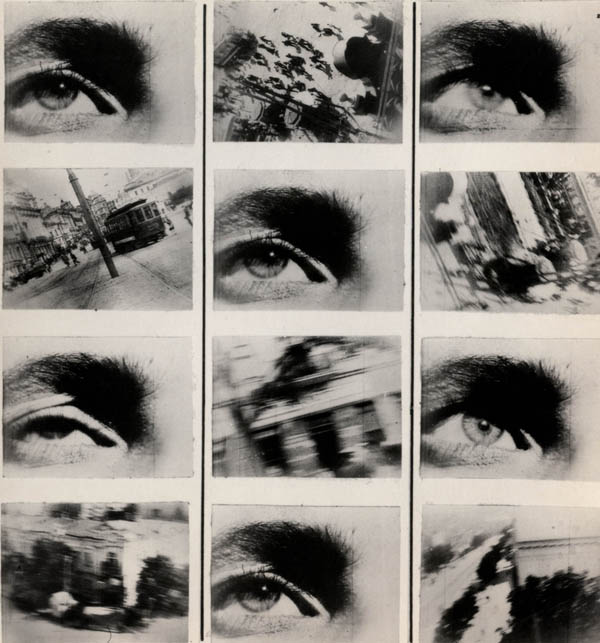
From Lev Manovich's The Language of New Media. Reflect on the qualities that he identifies as pertaining to 'new media' as we integrate our encounters with the technologies and changed social contexts of digital converged media.

Manovich, What Is New Media?

plus:

Wednesday, March 11, 2015

For Those About To Rock: Return of the Aura


Frank Zappa & Captain Beefheart


"I mean, man, whither goest thou? Whither goest thou, America, in thy shiny car in the night?"
-Jack Kerouac

-Keightley, "Reconsidering Rock"


Here are a couple of articles to integrate Keightley's Reconsidering Rock article. The first Frith article is required; the second article is a highly recommended read. Enjoy the Lester Bangs reviews from Creem. Reebee Garofalo's article on Soul ("Popular Music and the Civil Rights Movement") is required.

Simon Frith - "Rock and Popular Culture"
Simon Frith - "The Magic The Can Set You Free": The Ideology of Folk and the Myth of the Rock Community
Paul Clarke - "'A Magic Science': Rock Music as a Recording Art"
Lester Bangs - Various Record Reviews from Psychotic Reactions and Carburetor Dung
Reebee Garofalo - Popular Music and the Civil Rights Movement

Also, here is Andrew Chester's "For A Rock Aesthetic", Richard Merton's response, "Comments" and Chester's response to the response, "Second Thoughts on a Rock Aesthetic: The Band". It's all here at this link --the whole epochal exchange in one handy location.

Please read in 'Rocking Out' up to and including Chapter 8.


AC/DC, Let There Be Rock (1977) 
Reverend Bon tells you all about it. As you can see the 'aura' is back around Angus' head.

Tuesday, March 10, 2015

Audience Heatmaps: Assessment, Interactivity, Analytics and Chatter


The Audience Response Heatmap from Bluefin


Andrejevic, The Twenty-First-Century Telescreen
Marshall, Screens: Television's Dispersed 'Broadcast'

McChesney, What is the Elephant in the Digital Room? from Digital Disconnect

Refer to Jon Gertner's epigraph in Chapter 6 of The Television Will Be Revolutionized:

"Finding out whether ''C.S.I.'' beats ''Desperate Housewives'' is just the beginning. Change the way you count, for instance, and you can change where the advertising dollars go, which in turn determines what shows are made and what shows then are renewed. Change the way you count, and potentially you change the comparative value of entire genres (news versus sports, dramas versus comedies) as well as entire demographic segments (young versus old, men versus women, Hispanic versus black). Change the way you count, and you might revalue the worth of sitcom stars, news anchors and -- when a single ratings point can mean millions of dollars -- the revenue of local affiliates and networks alike. Counting differently can even alter the economics of entire industries, should advertisers (thanks to the P.P.M.) discover that radio or the Web is a better way to get people to know their brand or buy their products or even vote for their political candidates. Change the way you measure America's culture consumption, in other words, and you change America's culture business. And maybe even the culture itself."

The complete Jon Gertner (from The New York Times Magazine), "Our Ratings, Ourselves" here.

A recent Toby Miller blogpost, "TV is Dead" chock full of nice links and statistics about TV consumption

The following are good background readings about network and transition era audience assessment methods. They also offer a good reflection and analysis of the ways in which audience assessment are used in developing a political and regulatory environment for media systems in general and television in particular.

Meehan, The Blame Game
Meehan, Don't Blame The Viewers

Ang, The Nature of the Audience
Gandy, Tracking the Audience


Monday, March 9, 2015

The In-Between Years (or The Empire Strikes Back)


The Folk Revival:

The Kingston Trio - Tom Dooley
Pete Seeger - Turn Turn Turn!
Joan Baez - Silver Dagger
Bob Dylan - Masters of War
Lyrics here.

Surf & Hot Rod Combos:

The Beach Boys - Surfin USA

Dick Dale & The Del-Tones - Miserlou
Link Wray & His Ray Men - Rumble (Outtake)
The Stingers (Jack Cole) - Mustang

Uptown R&B from Motown/All songs by Holland-Dozier-Holland:

Martha & The Vandellas - Nowhere To Run
The Four Tops - Reach Out I'll Be There
The Supremes - You Can't Hurry Love
Marvin Gaye - How Sweet It Is

Girl Groups/Phil Spector Wall of Sound/Songs by Weill & Mann:

The Ronettes - Be My Baby
The Crystals - Then He Kissed Me
The Crystals - Da Doo Ron Ron

Cynthia Weill & Barry Mann songs NOT produced by Phil Spector:

Lesley Gore - It's My Party

The Wall of Sound in full-effect:

Ike & Tina Turner - River Deep, Mountain High

The Righteous Brothers - You've Lost That Lovin' Feeling

Readings:
Keightley, "Reconsidering Rock"

nb. You will not be responsible for this reading for the midterm. We will discuss the issues and concepts raised in it after the exam. I do however urge you to read it as it offers a lot of points that would help your review of material that will actually be covered on the midterm.

In Garofalo you should read up to and including Chapter 6.


R'n'R or Trasubstantiated R'n'B?

Wednesday, March 4, 2015

COM 220 + COM 311 Study Guides


Busy?


Study guides:
COM 220 (THE MIDTERM HAS BEEN MOVED TO THURSDAY, MARCH 12)
COM 311 (We will use some class time to go over these)
Enjoy.
Wise words from Father Guido Sarducci below.


Sunday, March 1, 2015

BREAKING NEWS on Net Neutrality

BREAKING NEWS: A nice conclusion to our discussion about net neutrality and the open internet.
Below, find an interview with Tim Wu, the lawyer/academic responsible for coining the term 'net neutrality' and one of the people who was most active in pushing the campaign in favour of the principle. On Democracy Now! he discusses the important vote by the FCC to preserve the principle of an 'open internet' and net neutrality. This of course follows from US President Obama's recent coming out in favour of the open internet and the questions that his position apparently raised vis a vis the FCC and the FCC chairman Tom Wheeler.


 Find John Oliver's now famous report on net neutrality below as well as President Obama's statement.

Networks & Emancipatory Uses of the Media


Here are the new readings:
Hans Magnus Enzensberger's "Constituents of a Theory of the Media" is one of the fundamental articles envisioning a new use for media technologies by political movements during the late '60s and '70s, emancipatory tools for political mobilization and social change. Use Marco Tullio Giordana's I Cento Passi and the story of Peppino Impastato and Radio AUT as a way to contextualize and visualize the historical moment in which Enzensberger is writing.

Something to think about in relation to the film is how Peppino Impastato's attempts at carving out a space for communication and direct political action (a public sphere within the confines of a small community dominated by organized crime) is dramatized in the film --from traditional political rallies to 'free radio', after navigating dadaist street theater, pamphleteering, film screenings and be-ins. Think specifically of the characteristics of RadioAut in relation to Enzensberger's article --programming, control, voice, 'mission', etc. Does the 'network' and the resultant digital media culture of today finally deliver on these expectations?

Enzensberger - Constituents of a Theory of the Media

Extra Readings on Old vs. New Media Conceptions:
Jack Schaefer - Reflections on Mediasaurus