Friday, December 10, 2010

Final Exam Study Guides


Hello all. I have been getting a number of emails in regards to study guides. The students in Intro to Cinema can find a list of terms and concepts below that are to be added to those already included in the midterm study guide. For those of you in Intercultural Communication and Race and Gender I really do not have a formal study guide written out for you as it would really amount to very little. I am much more interested in your ability to apply the theoretical perspectives as well as talk eloquently about these. As I said to both classes, the exams are cumulative, they will include material from the first half of the semester but will concentrate on the material covered in the second half.

Race and Gender:
All readings, but particularly those we went specifically over in class are required knowledge --the articles on 'race' and those dealing with GLBT representation in film and television in particular form the bulk of the theoretical and historical material. The readings on 'queer theory' are also required, particularly the ways in which they force us to reconsider media models to accomodate for the role of reception and audiences in the process. The format of the exam will follow that of the midterm.

Intercultural Communication:
The exam will be cumulative, as mentioned below. The format will be slightly altered as it will not include IDs and definitions and only contain two sections: short, direct answer questions and a final longer essay. A part from the material covering the readings and lectures previous to the midterm you should concentrate on the problematics associated with acculturation and the various processes, the communicative strategies tied to the processes and the ideological perspectives that they give rise to --be very clear on the distinctions between the associated terminology. The debate on globalization, global media, cultural globalization, cultural imperialism and the different forms of resistance to the communicative imbalances inherent in the forces of globalization and culture is the other important section. Be capable of using specific examples either from the ones covered in class or others which you feel can help you explain the theory. Prioritize the readings based on our class discussion.

Introduction to Cinema:
Study guide is here.

Sunday, December 5, 2010

INCEPTION; or, Dream a Little Dream within a Dream with Me


"INCEPTION; or, Dream a Little Dream within a Dream with Me"
by Kristin Thompson
from Observations on Film-Art, Bordwell & Thompson's Blog

"Inception reminds me of the common claim that Hollywood films are no longer character-centered. Special effects and slam-bang action supposedly have replaced character traits as the basis for storytelling. Now, here is a contemporary film released as a summer tentpole film and definitely successful in box-office terms. It crossed the $200 million domestic gross figure on Tuesday, August 3. Yet the nearly universal complaint, for those who don’t like the film, or some aspects of the film, is that we don’t get to know the characters.

If modern tentpoles have generally neglected characterization, that must be a convention by now. Why would people expect to find rounded characters? Is this complicated/complex (take your choice) intellectual film aimed at adults ironically going to prove that the critics of modern Hollywood blockbusters have been right all along?

I agree that the characters in Inception, apart from Cobb, the protagonist, are barely assigned traits. Ariadne, for example, does not return to join Cobb’s team as its architect because she has some personal goal or trait that inclines her to want to do so. It’s just that everyone who experiences the possibilities of shared dreams gets hooked.

But if there’s little characterization, is Nolan substituting something interesting in its place—apart from the usual computer-effects and spectacle?..."
Continues here.


Also, here is Bordwell's presentation of his The Way Hollywood Tells It: Story and Style in Modern Movies, a reflection on the cinema following the studios' demise and the end of the 'golden age'. The book is an attempt to reflect on how many norms—of plotting, characterization, narration, and visual style—have persisted across the last fifty years. Bordwell writes "focusing on the blockbuster, as many adherents of the post-classical position tend to do, ignores the vast bulk of production, which remain as in the studio years, program pictures. And some notable films (Jerry Maguire is my main instance) are even more thoroughly norm-abiding than typical films of the studio era." Bordwell also considers "alternative strategies of storytelling, such as “network narratives” or “puzzle films,” and some visual techniques (e.g., the spread of fast cutting)." Read on, you can find the Introductory Chapter here in pdf.


Introductory Chapter here.

Saturday, November 27, 2010

Active or Interactive? Copyrights and Copyfights II

Evil Bert & Che

Evil Bert is referenced in the Jenkins article below. Find the original Bert Is Evil website here at WayBackMachine. The story of the Bert Is Evil website is told here at Wikipedia. A contemporary site for all kinds of Evil Bert stuff is here.

Matt Mason - We Invented The Remix

Henry Jenkins - Photoshop for Democracy

You can find James Boyle's The Public Domain: Enclosing the Commons of the Mind --which is licensed under a Creative Commons Attribution-Noncommercial-Share Alike License-- available for download from Yale University Press here.

"Musical styles change over time and so do their techniques of appropriation. Sometimes musical generations find their successors are engaging in different types of borrowing than they themselves engaged in. They do not always find it congenial. It is striking how often musicians condemn a younger generation’s practice of musical appropriation as theft, while viewing their own musical development and indebtedness as benign and organic. … [Sampling] is a different kind of borrowing than the adaptation of a chord pattern from a gospel standard to make an R&B hit. But which way does the difference cut as a matter of ethics, aesthetics, or law?"

This is good material for those of you interested in copyright and appropriation especially if you are thinking of working on these issues for your final papers. Chapter 6 ("I Got A Mashup") is especially pertinent. Chapter 6 is here, from the 'annotatable' version on the website of Boyle's book.

Himanen, "From Netiquette to a Nethic"
(includes Linus Torvalds' Preface to The Hacker Ethic, "What Makes Hackers Tick?")
Wark, "The Hacker Manifesto"

Also, Dancehall/Reggae History Bonus (Recommended Reading):
Dick Hebdige - from Cut'N'Mix: Culture, Identity and Caribbean Music


Finally, Download Girl Talk's Feed The Animals from the Illegal Art website as a free download. Enjoy the 'official' 372 overlapping samples. You can find detailed info on all of them here.
Bob Christgau, the "Dean of American Rock Critics", provides an inter-generational appreciation of Girl Talk on NPR here.

Cultures and Globalizations

District 9 (Neil Blomkamp, South Africa/New Zealand, 2009)

Kevin Robins, "Encountering Globalization"
Anthony D. Smith, "Towards a Global Culture?"

Recommended Readings:
Robert W. McChesney, "The New Global Media"

All the readings above are from Held & McGrew (eds), The Global Transformations Reader: An Introduction to the Globalization Debate; 2nd Edition (Polity, 2003)


Additional readings:
Stuart Hall, "New Ethnicities"
Kobena Mercer, "Black Hair/Style Politics"
bell hooks, "Talking Back"

Queering Texts: Popular Culture and The Oppositional Gaze

Susan Sontag, "On Camp"

Richard Dyer, "In Defense of Disco"
Richard Dyer, "Judy Garland and Gay Men"

bell hooks, "The Oppositional Gaze"


"I Know You Are, But What Am I?"

Friday, November 19, 2010

Acculturation II: Persepolis


Marjane Satrapi, Persepolis
Three excerpts from the Graphic Novel: Kim Wilde, The Soup and The MakeUp

In preparation for the screening, as it specifically uses Iran's history as a case study to look at colonialism, cultural imperialism and related debates. Ali Mohammadi's article below is a very good introduction to the next group of readings on the globalization of culture, the media and hybridity as well as a contextualization of Marjane Satrapi's film.


Reminder: Screening Monday November 22 @8pm in GK1

Active or Interactive? Copyrights and Copyfights I


Aoki, Boyle and Jenkins, Bound By Law?
This is the comic book on copyright. Don't be fooled by its form: this is required reading.
You can also find it free on-line from its publisher --crazy, huh?-- Duke University and The Center for the Study of the Public Domain in a variety of formats. You can also 'remix' it and you're encouraged to translate it. It's all here.

From Technology Review (free registration might be required) read the debate around the question:

Who Should Own Ideas?

Lessig, "The People Own Ideas!"

Epstein, "The Creators Own Ideas!"
And the winner is...

While you're at it, look at your 'friends' on Facebook and ask yourselves: Who Owns Your Friends...

Larry Lessig, The 'Commons and Layers' Chapters from The Future of Ideas

Here's the complete version of the Lessig talk we will be watching excerpts from in class.
You can download it here.

This was Lessig's 'last' talk on Free Culture and it has that sort of summing up about it.
You can find his original presentation in a number of different formats (powerpoint, mp3, flash presentation, transcript, pdf, etc.) here.

Lawrence Lessig and The Future of Ideas by Bryan Alexander from Mindjack is an interesting summary article with lots of links.
Finally, here is the site for Creative Commons. Look them up.

GLBT Representation in Film and Television

Kylo-Patrick R. Hart, "Representing Gay Men on American Television"
Diane Raymond, "Popular Culture and Queer Representation: A Critical Perspective"

Susan J. Hubert, "What's Wrong With This Picture: The Politics of Ellen's Coming Out Party"
Fred Fejes, "Advertising and the Political Economy of Lesbian/Gay Identity"

Women's Cinema, Women in Cinema + Third Cinema

To accompany our discussions of Otto Preminger's Laura and Agnes Varda's Vagabond:


Also:

Of all African film directors, Sembene is the first to confer value to images."
--Med Hondo

Fernando Solanas & Octavio Getino, Towards a Third Cinema

If you are interested in reading a brief outline of the life, ideas and struggles of Ousmane Sembene: OUSMANE SEMBENE: THE LIFE OF A REVOLUTIONARY ARTIST

Tuesday, November 16, 2010

Hip Hop: Beyond Beats & Rhymes


Here is the first section of Hip Hop: Beyond Beats and Rhymes. Click on the video so that it opens up in YouTube and you will find the other 5 parts (for a total of 6). Enjoy.

Sunday, November 7, 2010

New Media: Convergence Culture & Collective Intelligence


from Convergence Culture


from The Future of Ideas

from The Hacker Ethic

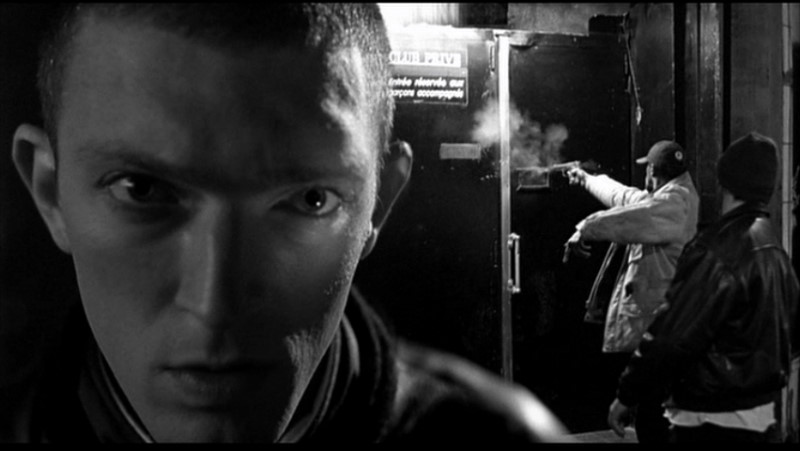
Acculturation I: La Haine

Yun Kim, "Adapting to a New Culture"
from Samovar et al., Intercultural Communication: A Reader; 12th Edition


For our discussion of Kassowitz's La Haine/Hate:

Brooks, "Gangsta, in French" from The New York Times Op-Ed Page
Rosen, "David Brooks: Playa Hater" from Slate.com, a response to Brooks


Below you can also find Etienne Balibar's now classic article on the 2005 banlieue revolts:

Etienne Balibar, "Uprisings in the Banlieues"

Monday, October 25, 2010

The Social Construction of Race, Part Deux


This is the bulk of readings for the 'discourses of race' section of the course as we wade through it this week and next. Please have these articles read in the order posted. Pay particular attention to Zook's article on the Fox Network as it invests that political economic perspective that is so well dramatized in Bamboozled as well as the Means-Coleman article on 'black sitcoms' which is a good example of textual analysis.

Kristal Brent Zook, "The Fox Network and the Revolution in Black Television"
Robin R. Means-Coleman, "Black Sitcom Portrayals"
Donald Bogle, "Workplace Dramas, Ensemble Casts 1990s Style"
Chyng Fen Sun, "Ling Woo in Historical Context: The New Face of Asian American Stereotypes on Television"

The Social Construction of Race I


This a short introductory article on race and the media. As we conclude screening Bamboozled and discuss the film, Ash Corea's "Racism and the American Way of Media" is a good summary of the issues raised in the film and those that you will be reading about in greater detail with the next group of articles. As a bonus, a classic article by Stuart Hall.

Ash Corea, "Racism and the American Way of Media" from Questioning the Media
Stuart Hall, "What is This 'Black' in Black Popular Culture" from Stuart Hall: Critical Dialogues in Cultural Studies


Clip from a 1949 film, Hollywood Varieties, where actors Glenn Vernon and Edward Ryan apply blackface make-up while on stage and reminisce about 'the good ol' days' --as they say-- of ministrelsy.

European Art Cinema


Ingmar Bergman's Persona (Sweden, 1966)

Chapter from David Bordwell's Poetics of Cinema on the "art film" here.

Sunday, October 24, 2010

InterCultComm + New Media Study Guides

Busy?

Here is the Intercultural Communication Study Guide
The New Media Study Guide is here.

Sunday, October 17, 2010

Language and Cultural Values

Samovar, "Language and Culture: The Essential Partnership"
from Samovar et al, Communication Between Cultures, 7th Ed (Wadsworth, 2009): Chapters 6,7 & 11

from Understanding Global Cultures, 4th Ed. (Sage, 2010): Chapter 1

Friday, October 15, 2010

Wednesday, October 13, 2010

Cinematic Specificity

Pee Wee's Big Adventure, The Greatest Bicycle Thief Homage Produced by Hollywood

Bazin's collection of articles on neo-realism from What Is Cinema?; Vol. II
(Please read only the articles on De Sica and The Bicycle Thief)
Below you will also find, embedded, Bazin's 'The Virtues and Limitations of Montage' from What is Cinema?; Vol I --click on the Google Books logo at the bottom of the frame and a new tab will open with a more comfortable page size for reading.


Vsevolod Pudovkin, "On Editing" from Film Technique
Sergei Eisenstein, "The Cinematographic Principle and the Ideogram" + "A Dialectic Approach to Film Form" from Film Form

The 'Odessa Steps' sequence in Sergei Eisenstein's Battleship Potemkin (USSR, 1925)
referred to in the "A Dialectic Approach to Film Form" article above.

Emancipatory Uses of the Media


Here are the new readings: Please find below Hans Magnus Enzensberger's "Constituents of a Theory of the Media" together with an article over viewing 'radical media' in Italy and the use of new communication technologies by political movements during the late '60s and '70s. This last article should accompany your viewing of Marco Tullio Giordana's I Cento Passi and provide you with context (both for the film itself and the historical period in which Enzensberger wrote the 'Constituents' article). The Hesmondalgh is an article attempting to define and focus the feature of 'alternative' and 'radical' media.

Something to think about in relation to the film is how Peppino Impastato's attempts at carving out a space for communication and direct political action (a public sphere within the confines of a small community dominated by organized crime) is dramatized in the film --from traditional political rallies to 'free radio', after navigating dadaist street theater, pamphleteering, film screenings and be-ins. Think specifically of the characteristics of RadioAut --programming, control, voice, 'mission', etc. Does the 'network' finally deliver on those expectations?

Enzensberger - Constituents of a Theory of the Media
Downing - Radical Media in Italy


Extra Readings on Old vs. New Media Conceptions:
Michael Crichton - Mediasaurus (1993)

Thursday, October 7, 2010

Saturday, October 2, 2010

New Media: Gaming

Pac-Man Skull

These are two articles on videogames and their history. Use them in conjunction with the screening of Game On: The Unauthorized History of Video Games screened in class.

Bolter & Grusin, "Computer Games" (from Remediation)
P. David Marshall, "Playing Game Cultures: Electronic Games"

Super Mario 25th Anniversary

Tuesday, September 21, 2010

Saturday, September 18, 2010

Text and Context: Political Economy & Reception

Janice Radway, "Women Read The Romance: The Interaction of Text and Context"

EXTRA READING: Stuart Hall, "Encoding-Decoding"

Textuality: Semiotics


To complement the other readings, here are three different discussions of 'semiotics' and semiotic analysis and their use for cultural studies and the analysis of media representations. These are not required readings if you have encountered 'media semiotics' before. I would however suggest, to those of you who are encountering 'semiotics' for the first time, to treat these readings as required readings: your work in class, your ability to grapple with the other required readings and your final project would certainly benefit from a familiarity with the concepts presented here.

Mieke Bal, Semiotics for Beginners
Scott McCloud, from Understading Comics: Chapter 2, Semiotics
Jonathan Bignell, Media Semiotics: Introduction + The Cinema

Tuesday, September 14, 2010

'New' Media: Impact of Digital Technology on Film and Television


These are the readings for the first weeks of class and discussion. Remember that we are still in the process of investigating the concept of 'new' media and trying to go beyond a mere chronology of now technologies in favor of a more nuanced and specific understanding of the truly 'new' aspects of digital converged media and the social potential/consequences from a politically progressive perspective --the 'what's new for society' question.

The articles here will introduce you to some of the more practical transformations that the appearance of digital technologies have produced in 'old' media like film and television. Please note that as we discussed in class, even in this case, the transformations are both smaller and larger than those one could imagine: on the one hand, the film and televisual experience is for the most part unchanged; on the other, however, the film medium and the specificity of the photo/cinematographic image has been dramatically transformed as it loses its indexicality and the medium goes from a synthetic to an analytic one while television's horizon ceases to be that of a regulated/national context to an open/transnational one.


David Croteau & William Hoynes, "The New Media Giants: Changing Industry Structure"

Sean Cubitt, "Digital Filming and Special Effects"
P. David Marshall, "Rejuvenation: Film in the Digital World"
Anne Friedberg, "CD and DVD"
Janet Wasko, "The Future of Film Distribution and Exhibition"

Michele Hilmes, "Cable, Satellite and Digital Technologies"
P. David Marshall, "Rejuvenation: Television"

Tuesday, September 7, 2010

Culture & Communication

Introduction: Culture and Communication
Communication and Culture: The Challenge of the Future
Chapter 1 from Samovar et al, Communication Between Cultures
The Deep Structure of Culture: The Roots of Reality
Chapter 2 from Samovar et al, Communication Between Cultures
Extra Article:
The two paradigms essay.

What English sounds like to non-English speakers: Prisencolinensinainciusol. Alright.

Cultural Studies and Representation: Race and Gender I

Power, Privilege and Discrimination
Peggy McIntosh, "White Privilege: Unpacking the Invisible Knapsack"

Cultural Studies & Representation
Douglas Kellner, "Cultural Studies, Multiculturalism and Media Culture"
Sanjukta Gosh, "'Con-Fusing' Exotica: Producing India in US Advertising"

Ideology and Hegemony

Stuart Hall, "The Whites of Their Eyes: Racing Ideologies and the Media"
James Lull, "Hegemony"

all readings are from Dines and Humez (eds), Gender, Race and Class in Media: A Text-Reader; 2nd Edition(Sage, 2003)

Wednesday, June 16, 2010

Eastern European Mass Media


Articles on the passage from the state/party controlled monopolies of Eastern European nations to the commodified systems post-1989. Everyone should read these articles as background for preparing their presentations.

Kevin Williams - "The Media in Eastern Europe"

European Mass Media: Deregulation, Commodification and Neo-Television


Here are two articles to think through some of the more specific issues on the paradigm shift in European Broadcasting during the 1980s and 1990s and the shift toward deregulation and privatization. The articles by Umberto Eco and Raymond Williams are two theoretical and critical reflections on the aesthetic repercussions of liberalization on both programs and audiences. Relate these readings to Nichetti's The Icicle Thief (Ladri di Saponette).

Saturday, June 12, 2010

National Cinemas, Art Films, American Friends and Cultural Imperialism or, What's Wrong With A Cowboy in Hamburg?

What's wrong with a cowboy in Hamburg?
"The Americans have colonized our subconscious" (Wenders in "Kings of the Road")

Readings for this week's discussion on the concept of National Cinema, the Art Film and Wim Wenders' Der Amerikanische Freund (1977)

Bordwell, "The Art Cinema as a Mode of Film Practice" from Poetics of Cinema
Elsaesser, "American Friends: Hollywood Echoes in the New German Cinema"
Jarvie, "Free Trade as Cultural Threat: American Film and TV Exports in the Post-War Period"

Here is a mainstream review of the film from everyone's favorite middle-brow film critic, Roger Ebert.

Sunday, June 6, 2010

'Free' or 'Pirate' Media?


Below is Hans Magnus Enzensberger's "Constituents of a Theory of the Media" where he discusses the concepts of 'emancipatory vs. repressive uses' of the media while offering a radical critique of traditional progressive conception of public/state media in favor of the 'new media' potentials of 'free' media. Hesmondalgh's article is a general reflection on the concept of alternative media, it's organization and the specific textual production.

Roger Chapman's article is a comparative analysis of the two main British 'pirate' radio stations, Radio London and Radio Caroline and how they differentiated themselves on the basis of their attitude to commercialism and their mission.

Finally John Downing writes on 'radical media' in Italy covering a number of activist situations and their use of new communication technologies by political movements during the late '60s and early '70s. This last article will be the clearest contextualization of Marco Tullio Giordana's I Cento Passi.

Something to think about in relation to I Cento Passi is how Peppino Impastato's attempts at carving out a space for communication and direct political action (a public sphere within the confines of a small community dominated by organized crime and their ties to the political realm) is dramatized in the film --from traditional political rallies to 'free radio' after navigating dadaist street theater, pamphleteering, film screenings and be-ins. Think specifically of the characteristics of RadioAut --programming, control, voice, 'mission', etc.

Hesmondalgh, "Alternative Media, Alternative Texts?"
Enzensberger, "Constituents of a Theory of the Media"
Chapman, "The 1960s Pirates: A Comparative Analysis of Radio Caroline and Radio London"

Downing, "Radical Media in Italy" from Radical Media