Tuesday, April 24, 2012
Pop Music + Cultural Resistance Study Guides
After the usual, wise and profound words of Father Guido here's the much agonized for Study Guides:
Popular Music here.
Remember that the exam is cumulative. Refer to the midterm study guide for that material.
Cultural Resistance here.


Friday, April 20, 2012
The World Tomorrow...

Here is a sampling of the articles that have appeared 'reviewing' Julian Assange's interview program, The World Tomorrow airing on RT (Russia Today) weekly. The Dissenter and Salon articles are very supportive of the program (based on the first installment and the interview with the notorious Sayyid Nasrallah, leader of Hezbollah) while the articles from The Guardian and The New York Times are very critical of Assange himself and the program. After the links you can find the embedded video of the entire interview so that you can evaluate independently. As you read follow the hyperlinks in the articles themselves and note how the links are organized and where they each lead. (Please note that The NYTimes article might require you to register).
Gosztola, "About Julian Assange's Revolutionary New Television Show" from The Dissenter
Greenwald, "Attacks on RT and Assange Reveal Much About the Critics" from Salon.com
Harding, "The World Tomorrow: Julian Assange Proves a Useful Idiot" from The Guardian
Stanley, "The Prisoner as Talk Show Host" from The New York Times"
Also, as promised, here is the link to the Motherboard/Vice documentary on the Free Network Foundation and its work with the Occupy Movement as it strives to keep network communications open, public and decentralized.
Wednesday, April 18, 2012
Cinema, TV, Gender and Race
 |
| Mufasa and Scar Face Swap |
Corea, "Racism and the American Way of Media"
Desjardins, "Cinema and Communication"
Thomas, "Myths in and About TV"
*Articles are from Downing et al (eds), Questioning The Media: A Critical Introduction (Sage, 1996)
Tuesday, April 17, 2012
Convergence Culture and Resistance

Did I mention that the following Jenkins article is something that you should read?
(Final) Pop Music Readings

Assuming that at this point you are (basically) all done with the Garofalo textbook, here are the reading assignments up to the end of the semester:
On Jamaican Music:
from Dick Hebdige, Cut'n'Mix here.
On 'co-optation':
Thomas Frank's "Commodify Your Dissent" here.
 On Gender:
Simon Frith and Angela McRobbie, "Rock and Sexuality"
Simon Frith, "Afterthoughts"
"Richard Dyer, "In Defense of Disco"
Find these articles here as a single PDF file.

On 'sub-cultures':
Here are the Dick Hebdige chapters from Subculture: The Meaning of Style. Refer back to the Punk: Attitude film screening.
The Ramones, "Do You Remember Rock'n'Roll Radio?" Live in Rome, 1980

On sampling, mash-ups and the 'postmodern turn':
Andrew Goodwin, "Sample and Hold"
E Ann Kaplan, "A Postmodern Play of the Signifier?"
Negativland, "from Wired: Negativland Interviews U2's The Edge"
Also, to clarify (or further obscure) 'postmodernism' please help yourself --in case you have not encountered it in your other studies-- to Fredric Jameson's "Postmodernism and Consumer Society"
Photoshop For Democracy

Evil Bert & Che
Evil Bert is referenced in the Jenkins article below. Find the original Bert Is Evil website here at WayBackMachine. The story of the Bert Is Evil website is told here at Wikipedia. A contemporary site for all kinds of Evil Bert stuff is here.
Henry Jenkins - Photoshop for Democracy
 You can find James Boyle's The Public Domain: Enclosing the Commons of the Mind --which is licensed under a Creative Commons Attribution-Noncommercial-Share Alike License-- available for download from Yale University Press here.
"Musical styles change over time and so do their techniques of appropriation. Sometimes musical generations find their successors are engaging in different types of borrowing than they themselves engaged in. They do not always find it congenial. It is striking how often musicians condemn a younger generation’s practice of musical appropriation as theft, while viewing their own musical development and indebtedness as benign and organic. … [Sampling] is a different kind of borrowing than the adaptation of a chord pattern from a gospel standard to make an R&B hit. But which way does the difference cut as a matter of ethics, aesthetics, or law?"
This is good material for those of you interested in copyright and appropriation especially if you are thinking of working on these issues for your final papers. Chapter 6 ("I Got A Mashup") is especially pertinent. Chapter 6 is here, from the 'annotatable' version on the website of Boyle's book.
Wark, "The Hacker Manifesto"
Also, Dancehall/Reggae History Bonus (Recommended Reading):
Dick Hebdige - from Cut'N'Mix: Culture, Identity and Caribbean Music
Also, Dancehall/Reggae History Bonus (Recommended Reading):
Dick Hebdige - from Cut'N'Mix: Culture, Identity and Caribbean Music
Finally, for those of you who still don't have it you can download Girl Talk's breakthrough Feed The Animals from the Illegal Art website as a free download. Enjoy the 'official' 372 overlapping samples. You can find detailed info on all of them here.
Saturday, March 31, 2012
Signs, Meaning and Power

In preparation for the screening of Jhally's Dreamworlds 3 here are two articles related to our discussion on signs, meaning and culture and their intersections with the construction of identity, desire and power.
Sut Jhally, "Image Based Culture"
Scott McCloud, Semiotics (from Understanding Comics)
Keith Negus, "Popular Music: Between Celebration and Despair" (from Questioning The Media)
Fatal Strategies? Retromania and Remix Culture

Henry Jenkins, "Photoshop for Democracy"
McKenzie Wark, The Hacker Manifesto
Popular Music Paper Assignment Numero Deux

Paper Assignment for Popular Music: find it here.
The boys play tracks from LPs, the girls 45s: from Sofia Coppola's The Virgin Suicides (1999)
Tuesday, March 13, 2012
Participatory Culture and Collective Intelligence
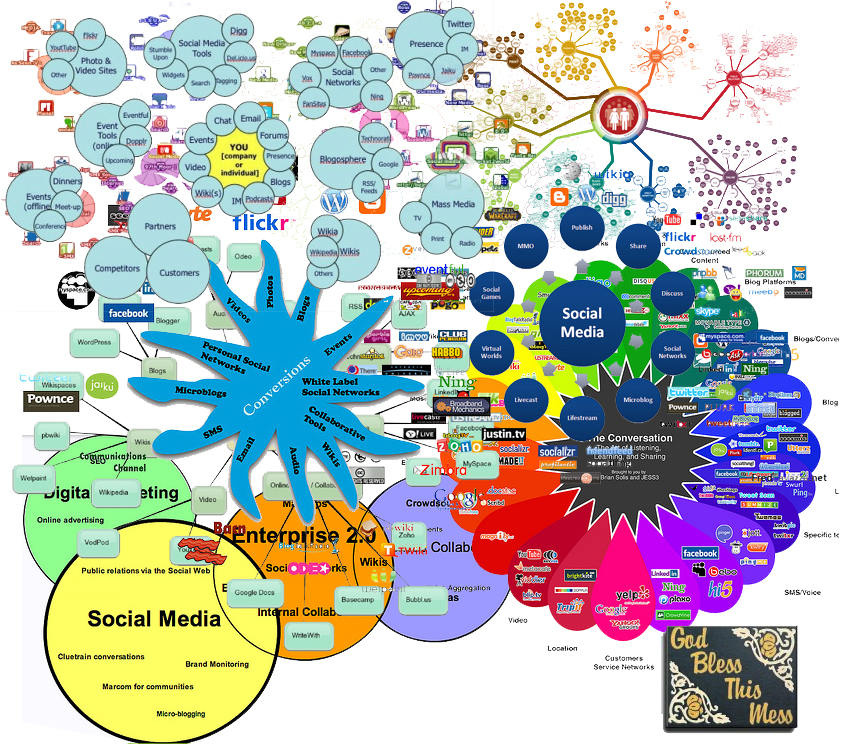
Jenkins, "Worship at the Altar of Convergence"
Jenkins, "Spoiling Survivor"
from Convergence Culture
from The Future of Ideas
Himanen, "From Netiquette to Nethic"
from The Hacker Ethic
Co-Optation and The Implosion of Meaning: Slackers
 Every single commodity you produce is a piece of your own death.
From Section Seven on "Commodities and Co-optation" please read:
Theodor Adorno, "On the Fetish-Character in Music and the Regression in Listening"
Richard Hoggart from The Uses of Literacy
Malcolm Cowley from Exile's Return
Thomas Frank, "Why Johnny Can't Dissent"
The Hoffman ("Revolution for the Hell of It") and Rubin ("Do It!") you can read 'for the Hell of it'.
Return to Section Three, "A Politics That Doesn't Look Like Politics" please (re)read:
Adolph Reed, Jr., "Why Is There No Black Political Movement?"
Hakim Bey from TAZ: The Temporary Autonomous Zone
Simon Reynolds from Generation Ecstasy
+ the account of 'a lynching in 1920'
The complete version of Baudrillard's "The Masses: The Implosion of the Social in the Media" is here.
Additional Recommended Baudrillard Readings:
Jean Baudrillard, Requiem for the Media
Jean Baudrillard, The Implosion of Meaning in the Media from Simulacra and Simulation
Also, and finally, here's the chapter from Cold World: The Aesthetics of Dejection and the Politics of Militant Dysphoria by Dominic Fox on Black/Death Metal: "A Sermon in the Name of Death"
Jean Baudrillard, Requiem for the Media
Jean Baudrillard, The Implosion of Meaning in the Media from Simulacra and Simulation
Also, and finally, here's the chapter from Cold World: The Aesthetics of Dejection and the Politics of Militant Dysphoria by Dominic Fox on Black/Death Metal: "A Sermon in the Name of Death"
For Those About To Rock: Return of the Aura
 Frank Zappa & Captain Beefheart
Simon Frith - "Rock and Popular Culture"
Simon Frith - "The Magic The Can Set You Free": The Ideology of Folk and the Myth of the Rock Community
Paul Clarke - "'A Magic Science': Rock Music as a Recording Art"
Lester Bangs - Various Record Reviews from Psychotic Reactions and Carburetor Dung
Reebee Garofalo - Popular Music and the Civil Rights Movement
Also, here is Andrew Chester's "For A Rock Aesthetic", Richard Merton's response, "Comments" and Chester's response to the response, "Second Thoughts on a Rock Aesthetic: The Band". It's all here at this link --the whole epochal exchange in one handy location.
Please read in 'Rocking Out' up to and including Chapter 8.
AC/DC, Let There Be Rock (1977)
Reverend Bon tells you all about it. As you can see the 'aura' is back around Angus' head.
Wednesday, March 7, 2012
Manovich, What Is New Media?
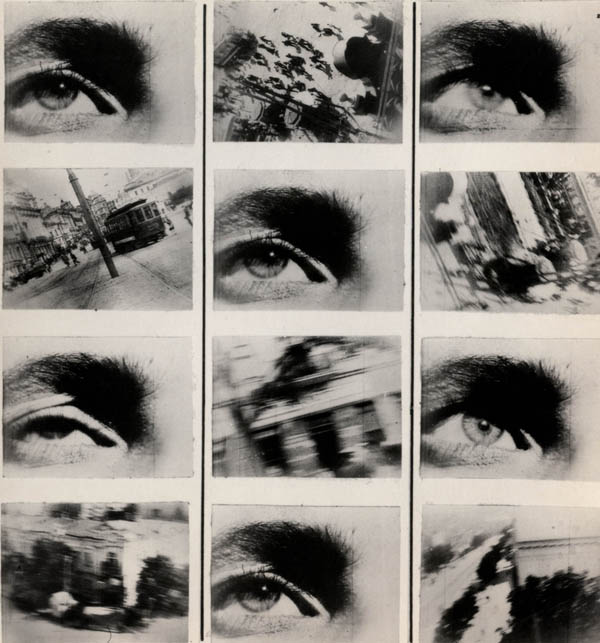
This is the complete chapter from Lev Manovich's The Language of New Media. Reflect on the qualities that he identifies as pertaining to 'new media' as we integrate our encounters with the technologies and changed social contexts of digital converged media.
Manovich, What Is New Media?
Friday, March 2, 2012
COM 220 Media, Culture and Society Study Guide

Busy?
Here is the study guide. We will use some class time to go over it in class on Tuesday. Remember that the Midterm has been moved to Thursday, March 8.
Popular Music Paper #1

Eddie Kirk, "The Grunt" (Fortune 7", 1958)
Subscribe to:
Posts (Atom)


 Posts
Posts

